December 21, 2017
What do you need to look out for in the power supply to ensure that the car is always roadworthy?
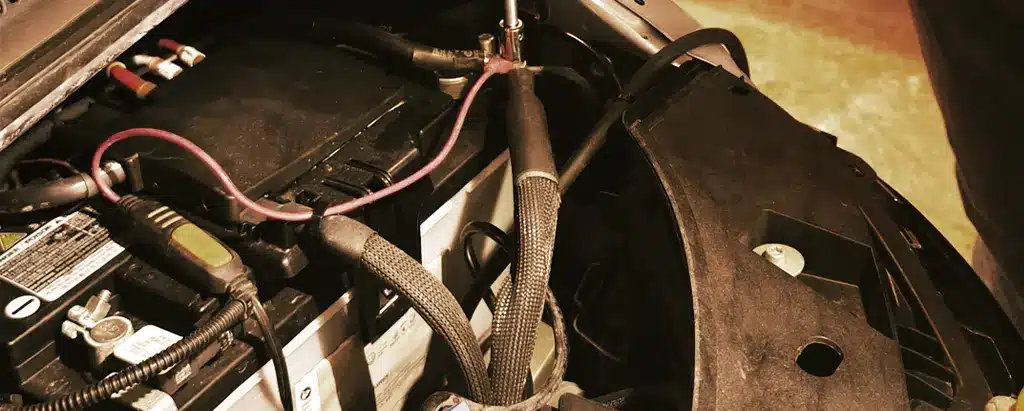
A vehicle that has to supply several „power guzzlers“ (lights, heating, air conditioning, on-board computer, radio, etc.) will sooner or later need a way to recharge its battery(ies). We therefore recommend a charger for the battery(ies).
Here you will find specific information on various power options to suit your VW. If you purchase VanEssa equipment from us at the factory, we are happy to offer this service. For all other campers, we recommend contacting a vehicle electrician (there may be a BOSCH service near you).
Charger:

Are you wondering why each battery needs its own charger?
The answer is quite simple. Both batteries have separate circuits from each other and also their own specific power consumers.
The starter battery, which is needed to start the engine, powers the cockpit lights, the radio, and the main power consumer, the onboard computer. Every single time the door is opened, regardless of which door it is, the onboard computer draws a large amount of power for three-quarters of an hour, even when the key is not in the ignition. Therefore, during a camping vacation, if you open and close the door a few times (which is inevitable whenever you are near the car), it can quickly happen that the car will no longer start.
The on-board battery under the driver's seat is used by all 12V sockets and lights behind the B-pillar. In addition, the cool box and the air heater - if fitted - also require power from the on-board battery.

Second battery:
The first question is whether you even need a second battery. However, if you like to camp off-grid or wild camp, your van will definitely need a second battery to ensure sufficient electrical capacity. This will then last for up to three days at a time.
If, on the other hand, you spend most of your time at the campsite and only want to camp wild for a maximum of one night and the following day, one battery is perfectly sufficient. The prerequisite is the possibility to recharge the starter battery at the campsite or at home afterwards with the help of a charger or the vehicle's alternator during a longer (!) drive of at least two hours.
Inverter:
If you also need a 230V socket when you are on the move, you would need to have an inverter installed. This allows you to operate devices such as a laptop or chargers for cell phones, cameras, etc. without an external power supply. However, it should be noted that an inverter cannot supply all devices with sufficient power, such as a coffee machine, kettle or hairdryer, as the inverter cannot achieve the necessary peak current that these devices require. It is also important to be aware that an inverter can discharge the battery deeply in the long term or if it is not switched off. As most devices such as cell phones, tablets etc. can already be charged via 12V nowadays anyway, an inverter is only really necessary for certain purposes.

Tips & Tricks
for your camper




Inspirations
from our travel blog